ویک-۲۰؛ اولین موفقیت بزرگ کمودور
کامپیوتر خانگی ارزانقیمتی که دنیا را تغییر داد
VIC-20 ⬡ 1980

کمودور ویک-۲۰ — کامپیوتری که از یک تراشه متولد شد
کمودور ویک-۲۰ در ژوئن سال ۱۹۸۰ در نمایشگاه کامپیوتر الکترونیک معرفی شد. اما توسعه آن بهطور تصادفی دو سال قبل شروع شده بود. کمودور، «تراشه رابط ویدئویی ۶۵۶۰» یا VIC1 را برای بازار بازیهای ویدئویی که در حال فروپاشی بود، مهندسی و تولید کرد. اما پس از اینکه نتوانست تراشه را به شرکتهای دیگر برای ساخت کنسول بازی بفروشد، کمودور ویک-۲۰ را به عنوان یک کامپیوتر خانگی ارزانقیمت دارای رنگ توسعه داد.
مهندسان فناوری شرکت MOS یعنی رابرت یانس، آل شارپنتیر و چارلز وینتربل با یک پروژه طراحی به نام TOI از چاک پدل و بیل سیلر که در فصل قبل کتاب با آنها آشنا شدیم شروع کردند. ظاهراً TOI قرار نبود وارد بازار شود زیرا به تراشههای رم استاتیک گرانقیمت و نمایشگر ۸۰ ستونی نیاز داشت که در آن زمان از نظر مالی عملی و مقرونبهصرفه نبود. یانس، وینتربل و شارپنتیر نسخه کاهشهزینهیافته TOI خود را به مدیرعامل کمودور، جک ترامیل، در پاییز ۱۹۷۹ نشان دادند و او بلافاصله آن را تأیید کرد.
جک میدانست که اپل یک بازیگر کوچک است، اما «اپل ۲»، کامپیوتر تازهمنتشرشده آنها که از پردازنده ۶۵۰۲ کمودور استفاده میکرد، سود زیادی از شرکت آنها میبرد. بنابراین او اصرار داشت که کامپیوتر خانگی جدید کمهزینه، آماده نمایش در نمایشگاه لوازم الکترونیکی مصرفی در ژانویه ۱۹۸۰ باشد. فشار زیادی بر تیم سهنفره مهندسین MOS وارد آمد. آنها تمام ۷ روز هفته در «پروژه ویکسن» بهصورت شبانهروزی کار میکردند تا این پروژه به سرانجام برسد.

جک ترامیل — مردی که همیشه بازی را میبرد
اما چیزی که به جک نشان داده بودند، حتی در مرحله ابتدایی هم نبود و عملاً نمیتوانست ساخته شود. این نمایشگر که «Vixen» نامگذاری شده بود، چیزی بیشتر از یک کامپیوتر مفهومی نبود. برای برآورده کردن انتظارات جک، باید همه چیز از اول شروع میشد و هزینهها به شدت کاهش مییافت. مشکل بزرگتر این بود که بقیه اعضای شرکت آنها را جدی نگرفتند.
جک ترامیل به مهندسانش گفت که آنها فقط میتوانند از تراشههای ۱کیلوبایتی حافظه در دستگاه جدید استفاده کنند، زیرا شرکت کمودور موجودی عظیمی دارد که نمیتوانست از آنها در محصولات دیگری استفاده کند. پس از تبادل نظر و گفتگوی داخلی زیاد، تصمیم گرفته شد ویک-۲۰ بتواند ۵/۵ کیلوبایت رم دریافت کند که ۲ کیلوبایت آن توسط سیستم عامل اصلی سیستم استفاده میشد.
محدودیتهای حافظه و زبان ماشین
برای انجام هر گونه توسعه معنادار در چنین فضای حافظه کوچکی نیاز به استفاده از زبان ماشین است که ابتداییترین زبان کامپیوتری نسل اول است و تقریباً هیچ هزینهای ندارد. متأسفانه ۳/۵ کیلوبایت حافظه باقیمانده، حتی برای بارگذاری یک کامپایلر زبان ماشین به اندازه کافی فضا ندارد، بنابراین توسعهدهندگان اغلب مجبور بودند کد ماشین را با دست بنویسند. اگر اندکی با برنامهنویسی آشنا باشید حتماً اطلاع دارید این مدل برنامهنویسی بسیار وقتگیر است.
رقبای این دستگاه جدید، کامپیوترهای خانگی اپل ۲، آتاری ۴۰۰ و تا حدی Radio Shack TRS-80 بودند. آنها ویژگیهای صدا و گرافیک اختصاصی داشتند اما بسیار گرانتر بودند. جک دستگاه ارزان میخواست و او به ندرت در مورد بازار اشتباه میکرد. برای دور زدن محدودیتهای سختافزاری، مهندسان نرمافزار از دستورات هوشمندانهای برای صداها و گرافیکهای «پیک» و «پوک» استفاده کردند.
اما هزینه تنها مزیت ویک نبود. به نظر میرسد ویک-۲۰ تصاویر واضحتری نسبت به رقبای خود بر روی صفحه نمایش نشان میداد، زیرا از اتصال ترکیبی به مانیتور کامپیوتر استفاده میکرد. آتاری و TRS-80 از یک آداپتور مدولاتور RF قدیمی (از دهه ۱۹۵۰!) برای اتصال به تلویزیون و مانیتور استفاده کردند. ویک با یک مدولاتور RF رایگان عرضه میشد که میتوان از آن برای اتصال آن به تلویزیون نیز استفاده کرد، اما کمودور، ویک را با نمایشگرهایی با کیفیت بالاتر نشان داد.

کارتریجهای بازی — منبع درآمد مضاعف کمودور
اگر به خاطر داشته باشید، در صفحات گذشته اشاره شد که کمودور یک معامله دیوانهکننده با شرکت تازهتأسیس مایکروسافت مذاکره کرده بود که به کمودور این حق را در سال ۱۹۷۷ داده بود که در ازای پرداخت یک هزینه ثابت، اجازه داشته باشند از تعداد نامحدودی از نسخههای مایکروسافت بیسیک به عنوان یک سیستم عامل استفاده کنند. این بدان معنی بود که هرگز در شرکت کمودور این دغدغه وجود نداشت که آنها قرار است از چه سیستم عاملی استفاده کنند. بیسیک کمودور، چیزی بیش از مایکروسافت بیسیک نبود. این قرارداد عملاً هیچ درآمدی برای مایکروسافت نداشت، اما به طور تصادفی به مایکروسافت مشروعیت و مقیاسی را داد که امروزه برای تبدیل شدن به استانداردی که توسعهدهندگان به آن هجوم میآورند بسیار حیاتی است.
این سوال مطرح شد که کدام نسخه از بیسیک کمودور در ویک-۲۰ نصب شود. تصمیم گرفته شد که Commodore Basic 2.0 (بسیار قدیمی) از PET 2001 روزهای اولیه بهترین انتخاب باشد زیرا ویژگیهای کمتری داشت و زمان کم بود، بنابراین محدود بودن، انتخاب کمریسکتری بود. جک همچنین از این ایده که کمودور میتواند با یک کارتریج اضافه که حاوی دستورات و برنامههای بیشتر باشد خوشش آمد. این طرح باعث درآمد مضاعف در آینده میشد و همچنین میتوانست مصرفکنندگان را برای خرید این دستگاه بیشتر ترغیب کند.
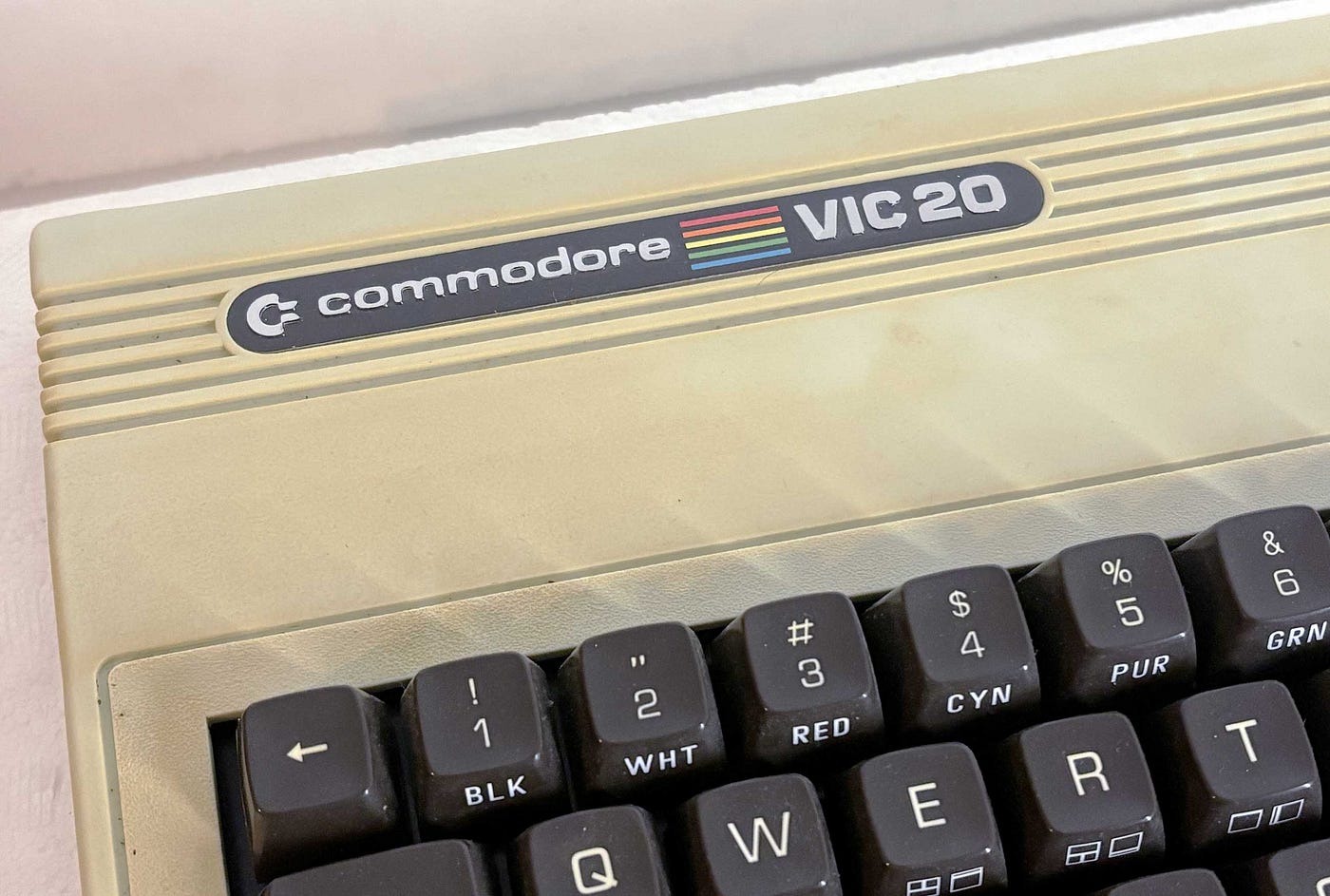
کمودور ویک-۲۰ — دستگاهی تقریباً استفادهنشده از دهه ۸۰
بین مدت زمانی اوایل سال ۱۹۸۱ که ویک در واقع به قفسههای فروشگاهها وارد شد و چند ماه اول سال ۱۹۸۵ که آخرین خط تولید ویک تعطیل شد، بیش از ۲/۵ میلیون دستگاه فروش رفته بود. اوج تولید روزانه ۹۰۰۰ دستگاه بسیار چشمگیر بود و اولین کامپیوتری نام گرفت که بیش از یک میلیون دستگاه فروخت. این موفقیت راه را برای کمودور ۶۴ — پرفروشترین کامپیوتر تاریخ — هموار کرد.
نرمافزار و بازیها
کمودور میدانست که برای راهاندازی ویک-۲۰ به نرمافزار نیاز دارد، بنابراین ۵ بازی ماجراجویی را تولید کرد که کاربر با تایپ دستورات متنی با آنها تعامل داشته باشد. آنها تنها از این ۵ کارتریج ۱/۵ میلیون دلار به دست آوردند. کمودور همچنین به سرعت چندین کارتریج افزایش حافظه (3K، 8K و 16K) را منتشر کرد و شرکتهای دیگر حتی کارتریجهای بزرگ 32K و 64K را تولید کردند.
در ابتدا قرار بود نام این کامپیوتر «میکروپت» گذاشته شود ولی نهایتاً نام ویک-۲۰ را با اقتباس از نام تراشه دستگاه و صرفاً بخاطر اینکه خوب به نظر میرسد انتخاب کردند.
اکثر ویکها در سوپرمارکتها و بسیاری از مشاغل دیگر فروخته میشدند که قبلاً هرگز انتظار فروش کامپیوتر را نداشتند. در کانادا، کمودور حتی ویکها را از طریق فروشگاههای زنجیرهای خودرو و قطعات Canadian Tire فروخت!
پایان ویک-۲۰
اواخر سال ۱۹۸۲ آغازی بود بر پایان: کمودور ۶۴ گرانتر اما بسیار توانمندتر معرفی شد. درست زمانی که ویک-۲۰ در حال محبوب شدن بود و بسیاری از فروشگاهها و برخی از سازمانهای بازاریابی موجودیهای قابل توجهی را به دست آورده بودند، شایعاتی شروع شد مبنی بر اینکه کمودور در حال تکمیل کار بر روی نسخه بسیار قویتر ویک-۲۰ به نام VIC 64 است. البته در نهایت به عنوان کمودور ۶۴ منتشر شد.
بدون شک برخی دلخور بودند. بسیاری از خردهفروشان موجودی زیادی از محصولات ویک را در انبار ذخیره کرده بودند که با کاهش شدید ارزش محصولات ویک-۲۰ مجبور به تلاش برای اصلاح برنامههای بازاریابی خود و به دست آوردن بازار برای به حداقل رساندن ضرر شدند.
تولید کمودور ۶۴ افزایش یافت، قیمت ویک کاهش یافت و تا سال ۱۹۸۴ آشکار بود که جایی در خط تولید کمودور برای ویک-۲۰ نخواهد بود و نهایتاً تولید را متوقف کردند، حتی بدون اینکه در ژانویه ۱۹۸۵ هنگام قطع تولید اطلاعیهای منتشر کنند.

کمودور ویک-۲۰ — اولین کامپیوتری که یک میلیون دستگاه فروخت
اما ویک-۲۰ برای اولین بار ۱ میلیون دستگاه فروخت و ۸۰۰ نرمافزار عظیم برای آن نوشته شد. ویک فقط یک موفقیت تجاری نبود. از نظر مالی برای کمودور یک کار پیشپاافتاده و خانگی بود، ولی صنعت کامپیوترهای خانگی نوپا را برای همه شرکتها گسترش داد و صدها هزار مشتری را به برنامهنویسی سوق داد. بعدها ماشینهای سری TED تلاش کردند راه ویک را ادامه دهند، اما سرنوشت دیگری داشتند.
«کامپیوترها برای تودهها، نه طبقات.» — جک ترامیل
#ویک_۲۰ #ویک20 #VIC20 #کمودور #Commodore #جک_ترامیل #JackTramiel #MOS_Technology #تراشه_ویدیویی #VideoInterfaceChip #کامپیوتر_خانگی #HomeComputer #کامپیوتر_ارزان #AffordableComputer #رتروکامپیوتر #RetroComputing #نوستالژی #Nostalgia #کامپیوترهای_شگفت_انگیز #AmazingComputers #تاریخ_فناوری #TechHistory #برنامه_نویسی #Programming #زبان_ماشین #MachineLanguage #بیسیک #BASIC #مایکروسافت #Microsoft #اپل_۲ #AppleII #آتاری #Atari #TRS80 #RadioShack #کارتریج_بازی #GameCartridge #کامپیوتر_دهه_هشتاد #1980sComputers #کمودور_۶۴ #Commodore64 #میکروپت #MicroPET #ChuckPeddle #BillSeiler #RobertYannes #AlCharpentier #CharlesWinterble #MOS6502 #CanadianTire #داستان_موفقیت #SuccessStory #تکنولوژی #Technology #کامپیوتر_تاریخ #ComputerHistory #رتروگیمینگ #RetroGaming #کلکسیونی #CollectorsItem #سری_TED #TEDSeries
VIC-20: Commodore's First Big Success
The Affordable Home Computer That Changed the World
VIC-20 ⬡ 1980
Commodore VIC-20 — A computer born from a chip
The Commodore VIC-20 was introduced at the June 1980 Consumer Electronics Show. But its development had actually begun two years earlier, almost by accident. Commodore had engineered and produced the "Video Interface Chip 6560" or VIC1 for the collapsing video game market. After failing to sell the chip to other companies for game console manufacturing, Commodore developed the VIC-20 as a low-cost color home computer.
MOS Technology engineers Robert Yannes, Al Charpentier, and Charles Winterble began with a design project called TOI from Chuck Peddle and Bill Seiler, whom we met in the previous chapter. The TOI was apparently never meant to hit the market because it required expensive static RAM chips and an 80-column display that wasn't financially practical at the time. Yannes, Winterble, and Charpentier showed their cost-reduced version of TOI to Commodore CEO Jack Tramiel in the fall of 1979, and he immediately approved it.
Jack knew Apple was a small player, but the newly released Apple II — which used Commodore's 6502 processor — was making significant profits. So he insisted that the new low-cost home computer be ready to show at the Consumer Electronics Show in January 1980. Immense pressure was placed on the three-person MOS engineering team. They worked around the clock, seven days a week, on "Project Vixen" to bring the project to completion.
Jack Tramiel — The man who always won the game
But what they had shown Jack wasn't even at the early prototype stage and practically couldn't be built. This "Vixen" display was nothing more than a concept computer. To meet Jack's expectations, everything had to start from scratch and costs had to be drastically reduced. The bigger problem was that the rest of the company didn't take them seriously.
Jack Tramiel told his engineers they could only use 1-kilobit memory chips in the new device because Commodore had a massive inventory that couldn't be used in other products. After much internal discussion, it was decided that the VIC-20 would receive 5.5 kilobytes of RAM, with 2 kilobytes used by the system's main operating system.
Memory Limitations and Machine Language
Any meaningful development in such a small memory space required the use of machine language — the most primitive first-generation computer language that costs almost nothing. Unfortunately, the remaining 3.5 kilobytes of memory wasn't even enough to load a machine language compiler, so developers often had to write machine code by hand. If you're at all familiar with programming, you know this method is extremely time-consuming.
Competitors to this new device were the Apple II, Atari 400, and to some extent the Radio Shack TRS-80. They had proprietary sound and graphics features but were far more expensive. Jack wanted a cheap machine, and he was rarely wrong about the market. To work around hardware limitations, software engineers used clever "PEEK" and "POKE" commands for sounds and graphics.
But cost wasn't the VIC's only advantage. The VIC-20 appeared to display clearer images than its competitors because it used composite connection to a computer monitor. Atari and TRS-80 used an old RF modulator adapter (from the 1950s!) for TV and monitor connection. The VIC shipped with a free RF modulator that could also be used for TV connection, but Commodore showed the VIC with higher quality displays.
Game cartridges — Commodore's source of additional revenue
If you recall, earlier pages mentioned that Commodore had negotiated a crazy deal with the newly founded Microsoft in 1977, giving Commodore the right to use unlimited copies of Microsoft BASIC as an operating system for a flat fee. This meant Commodore never worried about which operating system to use. Commodore BASIC was nothing more than Microsoft BASIC. This deal generated virtually no revenue for Microsoft but accidentally gave Microsoft the legitimacy and scale that would prove crucial for becoming the standard developers flock to today.
The question arose of which version of Commodore BASIC to install in the VIC-20. It was decided that the (very) old Commodore Basic 2.0 from the early PET 2001 days was the best choice because it had fewer features — and with time being short, being limited was a lower-risk choice. Jack also liked the idea that Commodore could offer an additional cartridge containing more commands and programs. This would generate additional future revenue and could further entice consumers to buy the device.
Commodore VIC-20 — An almost unused original from the 80s
Between early 1981 when the VIC actually hit store shelves and the first months of 1985 when the last VIC production line shut down, over 2.5 million units had been sold. The peak daily production of 9,000 units was remarkable, and it became the first computer to sell over one million units. This success paved the way for the Commodore 64 — the best-selling computer in history.
Software and Games
Commodore knew it needed software to launch the VIC-20, so it produced 5 adventure games where users interacted through typed text commands. From just these 5 cartridges, they earned $1.5 million. Commodore also quickly released several memory expansion cartridges (3K, 8K, and 16K), and other companies even produced larger 32K and 64K cartridges.
Initially, the computer was going to be named "MicroPET," but they ultimately chose VIC-20, borrowing from the device's chip name, simply because it sounded good.
Most VICs were sold in supermarkets and many other businesses that had never expected to sell computers before. In Canada, Commodore even sold VICs through Canadian Tire automotive and parts chain stores!
The End of VIC-20
Late 1982 marked the beginning of the end: the more expensive but far more capable Commodore 64 was introduced. Just as the VIC-20 was gaining popularity and many stores and marketing organizations had acquired significant inventory, rumors began that Commodore was finishing work on a much more powerful version of the VIC-20 called VIC 64. It was eventually released as the Commodore 64.
No doubt some were upset. Many retailers had stocked large VIC inventories and, with the sharp decline in VIC-20 product values, were forced to revise their marketing plans and secure markets to minimize losses.
Commodore 64 production ramped up, VIC prices dropped, and by 1984 it was clear there would be no place in Commodore's product line for the VIC-20. Production was eventually stopped without even issuing an announcement when it ceased in January 1985.
Commodore VIC-20 — The first computer to sell one million units
But the VIC-20 was the first to sell 1 million units, and 800 massive software titles were written for it. The VIC wasn't just a commercial success. Financially, it was a modest, homegrown achievement for Commodore, but it expanded the fledgling home computer industry for all companies and drove hundreds of thousands of customers into programming. Later, the TED series machines tried to continue the VIC's path, but met a different fate.
"Computers for the masses, not the classes." — Jack Tramiel
▚ Sources and Related Links
#VIC20 #Commodore #JackTramiel #MOSTechnology #VideoInterfaceChip #HomeComputer #AffordableComputer #RetroComputing #Nostalgia #AmazingComputers #TechHistory #Programming #MachineLanguage #BASIC #Microsoft #AppleII #Atari #TRS80 #RadioShack #GameCartridge #1980sComputers #Commodore64 #MicroPET #ChuckPeddle #BillSeiler #RobertYannes #AlCharpentier #CharlesWinterble #MOS6502 #CanadianTire #SuccessStory #Technology #ComputerHistory #VintageComputing #RetroGaming #8BitComputing #PersonalComputer #VIC20History #CommodoreVIC20 #CollectorsItem #TEDSeries