این سه تراشه — پائولا، اگنس و دنیس — قلب تپنده آمیگا بودند. هر کدام وظیفهای مشخص داشتند و در کنار هم، کامپیوتری ساختند که دههها جلوتر از زمانش بود. این تراشهها پدر جد کارتهای گرافیک و مادربردهای صدای حرفهای دهه بعد هستند. تراشه اگنس را در مقاله اختصاصی آمیگااستور بررسی کنید.
پائولا؛ جادوگر صدا
تراشه پائولا شامل مدار منطقی برای پخش صدا، کنترل درایو فلاپی دیسک، ورودی/خروجی پورت سریال و دکمههای ماوس/جویاستیک است. این تراشه از نظر عملکرد در تمام مدلهای آمیگا که کمودور ارائه کرد یکسان باقی ماند. پائولا توسط گلن کلر طراحی شده است. نامش مخفف ساختگی Ports, Audio, UART and Logic است — و اتفاقاً نام دوستدختر طراح تراشه هم هست!
چیزی که پائولا را انقلابی کرد این بود که میتوانست صدای نمونهبرداری شده را از حافظه پخش کند بدون اینکه نیازی به پردازنده مرکزی برای انجام بخش عمده کار داشته باشد. مقایسهای اینجا میتواند کمک کند: در مکینتاش اپل آن زمان، برای پخش یک صدا، پردازنده باید بیت بعدی داده نمونه را بیش از ۲۲۰۰۰ بار در ثانیه در رجیستر صدا بارگذاری میکرد و هر کاری را که در آن لحظه انجام میداد قطع میکرد. پردازنده فقط میتواند یک کار در یک زمان انجام دهد — بنابراین عملاً خیلی کند میشد.
در آمیگا، پردازنده به پائولا میگوید نمونه کجای رم چیپ ذخیره شده، برای چه مدت باید پخش شود و با چه سرعتی. بعد پائولا صدا را کاملاً بدون دخالت پردازنده پخش میکند — مگر اینکه نیاز به قطع زودهنگام صدا باشد.
مثال سادهای این تفاوت را روشن میکند. در نظر بگیرید در حال پختن کیک هستید و میخواهید همزمان موسیقی گوش دهید. شما پردازنده هستید. در آمیگا و مکینتاش تقریباً با سرعت یکسان کار میکنید — در زندگی واقعی دقیق نیست اما مثال به اندازه کافی نزدیک است. سیدی صدایی است که میخواهید بشنوید، در رم بارگذاری شده، و سیدی پلیر تولیدکننده صداست — مثل مدار خروجی صدا در مکینتاش یا تراشه پائولا در آمیگا.
حالا یک سیدی را در پخشکننده میگذارید و پخش را فشار میدهید. اگر این کار را آمیگا انجام دهد، سیدی از ابتدا تا انتها پخش میشود بدون اینکه وقفهای در پخت کیک ایجاد شود. اگر به مکینتاش بسپارید، باید هر ثانیه حین پخت کیک همه کار را متوقف کنید، بروید سراغ سیدی پلیر و دوباره پخش را فشار دهید. با مکینتاش، پخت کیک شما روزها طول میکشد!
این قابلیت در آن زمان واقعاً انقلابی بود و به همین دلیل بود که کامپیوترهای آمیگا با وجود داشتن پردازنده ۶۸۰۰۰ یکسان با مکینتاش یا آتاری ST، همیشه عملکرد بهتری از آنها داشتند.

اگنس؛ مدیر ترافیک دادهها
نام Agnus از "Address Generator UnitS" مشتق شده — چون همه رجیسترهای آدرس/اشارهگر را در خود جای داده و دسترسی به حافظه تراشههای سفارشی را کنترل میکند. اگنس بخش مرکزی چیپستهای اصلی — OCS — و چیپستهای توسعهیافته آمیگا — ECS — است.
روش کار اگنس شبیه مجموعهای از چراغهای راهنمایی است. اگنس جریان دادهها را در امتداد ۲۵ خط مجزا — ۲۵ کانال DMA یا دسترسی مستقیم به حافظه — درون چیپست کنترل میکند و همچنین تعیین زمانبندی ویدیویی را به عهده دارد.
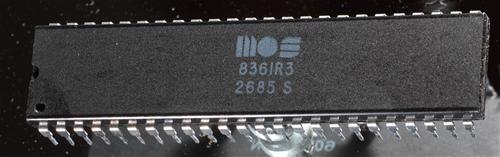
اگنس همچنین حاوی «همپردازنده» بلیتر و کوپر است. بلیتر — Blitter — به کپی کردن محتویات یک بخش از حافظه تراشه در مکان دیگر اختصاص دارد، بسیار سریعتر — تقریباً دو برابر سریعتر — از پردازنده ۶۸۰۰۰. به جز کپی ساده میتواند دستکاریهای بیشتری هم انجام دهد: ترکیب منطقی حداکثر ۳ منبع، جابهجایی دقیق پیکسل، ترسیم خط و پر کردن منطقه ساده.
کوپر — COPPER — با شمارشگرهای موقعیت پرتوهای ویدئویی هماهنگ میماند و دسترسی مستقیم به آنها دارد بدون نیاز به انتقال دادههای حافظه تراشه. میتواند تا رسیدن به یک موقعیت خاص صبر کند و بعد مقداری را به یک رجیستر سختافزاری چیپست منتقل کند. سومین دستور کوپر — SKIP — میتواند به ساخت بندهای ساده IF-THEN کمک کند. با وجود سادگی ظاهری، کوپر برای بسیاری از فعالیتها بسیار کاربردی است — از تازه کردن و بارگیری مجدد رجیستر ساده گرفته تا رنگ و وضوح کاملاً کنترلشده در وسط صفحه، یا حتی شروع حرکت درخشندگی به صورت همگام با پرتو.
اگنس از سال ۱۹۸۴ تا زمانی که تراشه آلیس در چیپست AGA در سال ۱۹۹۲ جایگزینش شد تغییرات زیادی کرد. سلسله مراتب اگنس دو شاخه اصلی دارد: اگنس «لاغر» و اگنس «چاق». اگنس لاغر بسته اصلی ۴۸ پین DIP است که در آمیگا ۱۰۰۰ و آمیگا ۲۰۰۰ «آلمانی» اولیه استفاده شد. فقط دو نوع از اگنس لاغر وجود دارد: 8361 با زمانبندی NTSC و 8367 با زمانبندی PAL. اگنس لاغر رجیسترهای اشارهگر DMA هجده بیتی دارد و میتواند ۵۱۲ کیلوبایت رم تراشه را آدرسدهی کند. همچنین یک «اشکال» کوچک دارد که در نسخههای «چاق» اصلاح شد.
اگنس «چاق» نسخه بستهبندی PLCC و ۸۴ پین معروفتر است که در آمیگا ۵۰۰ معرفی شد و در آمیگا 2000-B و آمیگا ۳۰۰۰ و CDTV هم استفاده شد. اصطلاح «چاق» به این دلیل است که این تراشه حالا یک مولد ساعت ساده با خودش دارد که تمام ساعتهای لازم سیستم را از نوسانگر اصلی ۲۸ مگاهرتز تولید میکند، و یک کنترلکننده DRAM برای رم آهسته هم داخلش قرار دارد.
انواع فت اگنس
اگنس 8370/8371 اصلی: کنترل ۱ مگابایت رم، اشارهگرهای DMA هنوز ۱۸ بیتی — فقط ۵۱۲ کیلوبایت رم تراشه پشتیبانی میشود. معمولاً در آمیگا ۵۰۰ rev3-4-5 و آمیگا 2000B.
اگنس 8372A پیشرفته (ECS): پشتیبانی NTSC و PAL قابل انتخاب از طریق پین ۴۱ و نرمافزار. هنوز تا ۱ مگابایت رم را کنترل میکند اما حالا همه را به عنوان رم تراشه نشان میدهد. معمولاً در آمیگا ۵۰۰ rev6A، آمیگا 2000B و CDTV.
اگنس 8372B پیشرفته (ECS): اساساً 8372A با پشتیبانی از ۲ مگابایت رم. معمولاً در آمیگا ۳۰۰۰ و ارتقاهای مگا چیپ.
سری 8375: همه مدلهای ECS با قابلیت تنظیم نرمافزاری PAL/NTSC. مدل 390544-01 و -02 با پشتیبانی ۲ مگابایتی در آمیگا ۵۰۰ پلاس و آمیگا ۶۰۰ اولیه.
در چیپست AGA تجسم اگنس، تراشه آلیس است — هر دو سختافزار و وظایف مشابهی دارند.
دنیس؛ چشم آمیگا
دنیس — DENISE — مخفف ساختگی Display ENabler است. در روزهای اولیه آمیگا ۱۰۰۰ و آمیگا ۵۰۰ اغلب به آن «دافنه» میگفتند. تفاوتی در عملکرد نیست، به جز نسخه استفادهشده در آمیگا ۱۰۰۰ اولیه — 8362 R5 با بسته سرامیکی — که قادر به نمایش حالت گرافیکی EHB نیست.
در ماشینهای OCS و ECS، دنیس از حداکثر ۶ رجیستر داده «بیت پلن» برای دریافت دادههای نمایشی استفاده میکند که اگنس از طریق کانالهای DMA مربوطه از رم تراشه بازیابی میکند. دادههای بیت پلن در رابطه با حالت گرافیکی فعال فعلی، منجر به جریان ثابتی از مقادیر خروجی RGB دیجیتال ۱۲ بیتی — ۴ بیت برای هر جزء قرمز، سبز و آبی — میشود که با حالت نمایش همگامسازی شدهاند.

سپس دادههای دیجیتال به یک شبکه مقاومتی معروف به Video Hybrid — یا VIDIOT — وارد میشوند که سیگنال RGB آنالوگ نهایی را تولید میکند. همگامسازی با حالت نمایش ادامه پیدا میکند و تصویر برای نمایش روی تلویزیون یا مانیتور آماده است.
دنیس وظیفه خواندن اطلاعات محور از هر دو پورت ماوس را به صورت چندگانه بر عهده دارد، همچنین مسئول نمایش هر اسپرایت در حال استفاده است — با حداکثر ۸ رجیستر داده اسپرایت که در ابتدای هر خط اسکن از طریق کانالهای DMA اسپرایت مربوطه اگنس تغذیه میشوند. علاوه بر این، اولویتهای نسبی بین زمینه نمایش و اسپرایتها را کنترل میکند و میتواند برخوردهای خاص اسپرایت/زمین بازی را تشخیص دهد — کمکی بزرگ برای طراحی بازی.
دنیس بعدها با چیپ «لیزا» در چیپست AGA — تنها جزء واقعاً ۳۲ بیتی چیپست AGA — جایگزین شد. یک بهروزرسانی کاملاً سازگار با پین به نام 8373 R4 — معروف به «سوپر دنیس» — دریافت کرد که به طور پیشفرض در آمیگا ۳۰۰۰، آمیگا ۵۰۰ پلاس، برخی نسخههای پایانی آمیگا ۲۰۰۰ و آمیگا ۶۰۰ یافت میشود. همراه با ECS Agnus بخشی از چیپست ECS است.
نسخههای بعدی دنیس میتوانستند طیف وسیعتری از وضوح صفحه نمایش و نرخ اسکن داشته باشند، اما به یک اگنس توسعهیافته هم نیاز داشتند تا زمانبندی لازم برای حالتهای نمایش جدید را فراهم کند. بنابراین کاملاً امکان «تبدیل» هر آمیگا ۵۰۰ یا ۲۰۰۰ قدیمی به مشخصات ECS وجود داشت — به جز آمیگا ۱۰۰۰ و آمیگا ۲۰۰۰ «آلمانی» اولیه که از نوع ۴۸ پین «دیپ اگنس» استفاده میکنند.
حالتهای نمایش جدید فقط با زمان NTSC/PAL — 60/50 هرتز، 15.7 کیلوهرتز — متمایز میشدند و میتوانستند از نمایشگرهای جدیدتر به سبک VGA استفاده کنند. اما چون حالتهای پیشفرض همچنان حالتهای اصلی بودند، این قابلیت عملاً فقط برای دارندگان نمایشگرهای اسکن دوگانه یا مولتی اسکن واقعی — مثل Commodore 1940/1942 — در دسترس بود. دسترسی به چنین مانیتورهایی همیشه محدود بود.
در سال ۱۹۹۱، VGA عملاً استاندارد بود و دلیل زیادی برای پشتیبانی تولیدکنندگان از چنین مانیتورهایی وجود نداشت. این مشکل تا حدی با Scandoubler/Flickerfixer های داخلی/خارجی حل شد که به حالتهای اصلی اجازه نمایش در چنین نمایشگرهایی را میدادند. مدلهای آمیگا ۳۰۰۰ قبلاً با یک Scandoubler/Flickerfixer عرضه میشدند. همان سختافزار — بر اساس تراشه Amber — توسط کمودور به عنوان کارت حافظه ویدئویی جداگانه A2320 فروخته شد، اما چون از عمق رنگ ۱۲ بیتی پشتیبانی میکرد فقط برای آمیگا ۲۰۰۰ مناسب بود.
تعدادی Scandoubler/Flickerfixer برای آمیگاهای مبتنی بر AGA توسط سازندگان دیگر ساخته شد، اما برخی از آنها از عمق ۱۸ بیتی — ۲۶۲۱۴۴ رنگ — به جای ۲۴ بیت کامل — ۱۶۷۷۷۲۱۶ رنگ — AGA پشتیبانی میکنند و باید با یک AGA واقعی آزمایش شوند.
«این سه تراشه — پائولا، اگنس و دنیس — پدران کارتهای گرافیک و صدای حرفهای دهه بعد بودند.»
#پائولا #Paula #اگنس #Agnus #دنیس #Denise #آمیگا #Amiga #چیپست #Chipset #OCS #ECS #AGA #تراشه_صدا #SoundChip #تراشه_گرافیک #GraphicsChip #DMA #بلیتر #Blitter #کوپر #Copper #موتورولا۶۸۰۰۰ #Motorola68000 #رتروکامپیوتر #RetroComputing #نوستالژی #Nostalgia #کامپیوترهای_شگفت_انگیز #AmazingComputers #تاریخ_فناوری #TechHistory #سخت_افزار #Hardware #کامپیوتر_تاریخ #ComputerHistory #کارت_گرافیک #GraphicsCard #صدای_دیجیتال #DigitalAudio #انقلاب_دیجیتال #DigitalRevolution #دهه_هشتاد #1980s #مکینتاش #Macintosh #آتاری #Atari #پیشگام #Pioneer #رتروگیمینگ #RetroGaming
These three chips — Paula, Agnus, and Denise — were the beating heart of the Amiga. Each had a specific task, and together they built a computer decades ahead of its time. These chips are the forefathers of the graphics cards and professional sound cards of the following decade. Read about the Agnus chip in the exclusive AmigaStore article.
Paula; The Sound Magician
The Paula chip contains logic circuits for audio playback, floppy disk drive control, serial port I/O, and mouse/joystick buttons. Its functionality remained identical across all Amiga models that Commodore released. Paula was designed by Glenn Keller. The name is a fabricated acronym for Ports, Audio, UART and Logic — and coincidentally the name of the chip designer's girlfriend!
What made Paula revolutionary was that it could play back sampled sound from memory without needing the CPU to do most of the work. A comparison helps here: on the Apple Macintosh of that time, to play a sound, the processor had to load the next bit of sample data into the sound register over 22,000 times per second, interrupting whatever it was doing at that moment. A processor can only do one thing at a time — effectively slowing it down dramatically.
On the Amiga, the processor tells Paula where the sample is stored in chip RAM, how long to play it, and at what speed. Paula can then play the sound completely without processor intervention — unless the sound needs to be cut short for some reason.
A simple example clarifies this difference. Imagine you're baking a cake and want to listen to music at the same time. You are the processor. On the Amiga and Macintosh, you work at roughly the same speed — not exactly true in real life, but close enough for this example. The CD is the sound you want to hear, loaded in RAM, and the CD player is the sound producer — like the audio output circuit on the Macintosh or the Paula chip on the Amiga.
Now you put a CD in the player and press play. If the Amiga does this, the CD plays from start to finish without interrupting your cake baking. If you leave it to the Macintosh, you have to stop everything every second during baking, go to the CD player, and press play again. With the Macintosh, your cake baking would take days!
This capability was truly revolutionary at the time, and this is why Amiga computers always performed better than Macintosh or Atari ST despite having the same 68000 processor.
Agnus; The Data Traffic Manager
The name Agnus derives from "Address Generator UnitS" — because it contains all address/pointer registers and controls memory access for the custom chips. Agnus is the central part of the Original Chip Sets — OCS — and Enhanced Chip Sets — ECS — of the Amiga.
The way AGNUS works is like a set of traffic lights. AGNUS similarly controls data flow along 25 separate lines — 25 DMA channels — within the chipset, and also handles video timing.
Agnus also contains the Blitter and Copper coprocessors. The Blitter is dedicated to copying the contents of one part of chip memory to another location in chip memory, much faster — about twice as fast — than the 68000 processor. Besides simple copying, it can also provide more manipulations: logical combination of up to 3 sources, precise pixel shifting, line drawing, and simple area filling.
The COPPER stays synchronized with video beam position counters with direct access without needing to move chip memory data. It can wait until a specific position is reached and then move a value to a chipset hardware register. Copper's third instruction — SKIP — can help build simple IF-THEN clauses. Despite its apparent simplicity, Copper is very practical for many activities — from simple register refreshing and reloading to fully controlled color and resolution mid-screen, or even starting brightness movement in sync with the beam.
Agnus underwent many changes from 1984 until the Alice chip in the AGA chipset replaced it in 1992. The Agnus hierarchy has two main branches: the "thin" Agnus and the "fat" Agnus. The thin Agnus is the original 48-pin DIP package used in the Amiga 1000 and early "German" Amiga 2000. Only two types of thin Agnus exist: 8361 with NTSC timing and 8367 with PAL timing. The thin Agnus has eighteen-bit DMA pointer registers and can address 512KB of chip RAM. It also has a small "bug" that was fixed in the "fat" versions.
The "fat" Agnus is the more famous 84-pin PLCC package version introduced in the Amiga 500, also used in Amiga 2000-B, Amiga 3000, and CDTV systems. The term "fat" is because this chip now includes a simple clock generator producing all necessary system clocks from the main 28MHz oscillator, and a DRAM controller for slow RAM inside the fat Agnus.
Fat Agnus Variants
Original 8370/8371: Controls 1MB RAM, DMA pointers still 18-bit — only 512KB chip RAM supported. Usually found in Amiga 500 rev3-4-5 and Amiga 2000B.
Advanced 8372A (ECS): Supports NTSC and PAL selectable via pin 41 and software. Still controls up to 1MB RAM but can now show all as chip RAM. Usually found in Amiga 500 rev6A, Amiga 2000B, and CDTV.
Advanced 8372B (ECS): Essentially a 8372A with support for 2MB RAM. Usually found in Amiga 3000 and Mega Chip upgrades.
8375 series: All ECS models with software PAL/NTSC switching. Model 390544-01 and -02 with 2MB support in Amiga 500 Plus and early Amiga 600.
In the AGA chipset, Agnus's embodiment is the Alice chip — both have similar hardware and tasks.
Denise; The Eye of Amiga
DENISE is a fabricated acronym for Display ENabler. In the early days of the Amiga 1000 and Amiga 500, it was often called "Daphne." There is no functional difference, except the version used in the early Amiga 1000 — 8362 R5 in a ceramic package — which cannot display EHB graphics mode.
In OCS and ECS machines, Denise uses up to 6 "bitplane" data registers to receive display data that Agnus retrieves from chip RAM through its respective DMA channels. The bitplane data in relation to the currently active graphics mode results in a constant stream of 12-bit digital RGB output values — 4 bits for each red, green, and blue component — synchronized with the display mode.
The digital data then enters a resistor network known as the Video Hybrid — or VIDIOT — producing the final analog RGB signal. Synchronization with the display mode continues and the image is ready for display on TV or monitor.
Denise is responsible for reading axis information from both mouse ports in multiplexed fashion, and also for displaying any sprites in use — with up to 8 sprite data registers fed at the beginning of each scanline through Agnus's respective sprite DMA channels. Additionally, it controls relative priorities between the display background and sprites and can detect specific sprite/playfield collisions — a great help for game design.
Denise was later replaced by the "Lisa" chip in the AGA chipset — the only truly 32-bit component of the AGA chipset. It received a fully pin-compatible update called 8373 R4 — known as "Super Denise" — found by default in Amiga 3000, Amiga 500 Plus, some late Amiga 2000 versions, and Amiga 600. Together with ECS Agnus, it is part of the ECS chipset.
Later Denise versions could support a wider range of screen resolutions and scan rates, but also required an enhanced Agnus to provide the necessary timing for the new display modes. Therefore, converting any old Amiga 500 or 2000 to ECS specifications is entirely possible — exceptions being the A1000 and early "German" A2000 which use the 48-pin "DIP Agnus" instead of the "fat Agnus."
The new display modes differed from the original modes only by NTSC/PAL timing — 60/50Hz, 15.7kHz — and could use newer VGA-style displays, but since default modes remained the original ones, this capability was practically only available to owners of dual-scan or true multi-scan displays like the Commodore 1940/1942 models. Access to such monitors was always limited since only ancient CGA and outdated EGA modes used frequencies below 31kHz in the PC world. By 1991, VGA was practically standard and there was little reason for manufacturers to support building such monitors.
This problem was partially solved by internal/external scandoublers/flickerfixers that allowed the original modes to display on such monitors. Amiga 3000 models already shipped with a Scandoubler/Flickerfixer. The same hardware — based on the Amber chip — was sold by Commodore as a separate video memory card A2320, but since it supports 12-bit color depth, it was only suitable for the Amiga 2000.
Several Scandoubler/Flickerfixer devices were built by other manufacturers for AGA-based Amigas, but some support 18-bit depth — 262,144 colors — instead of full 24-bit — 16,777,216 colors — of AGA and should be tested with a real AGA.
"These three chips — Paula, Agnus, and Denise — were the forefathers of professional graphics and sound cards of the next decade."
▚ Sources and Related Links
#Paula #Agnus #Denise #Amiga #Chipset #OCS #ECS #AGA #SoundChip #GraphicsChip #DMA #Blitter #Copper #Motorola68000 #RetroComputing #Nostalgia #AmazingComputers #TechHistory #Hardware #ComputerHistory #GraphicsCard #DigitalAudio #DigitalRevolution #1980s #Macintosh #Atari #Pioneer #RetroGaming #VintageComputing